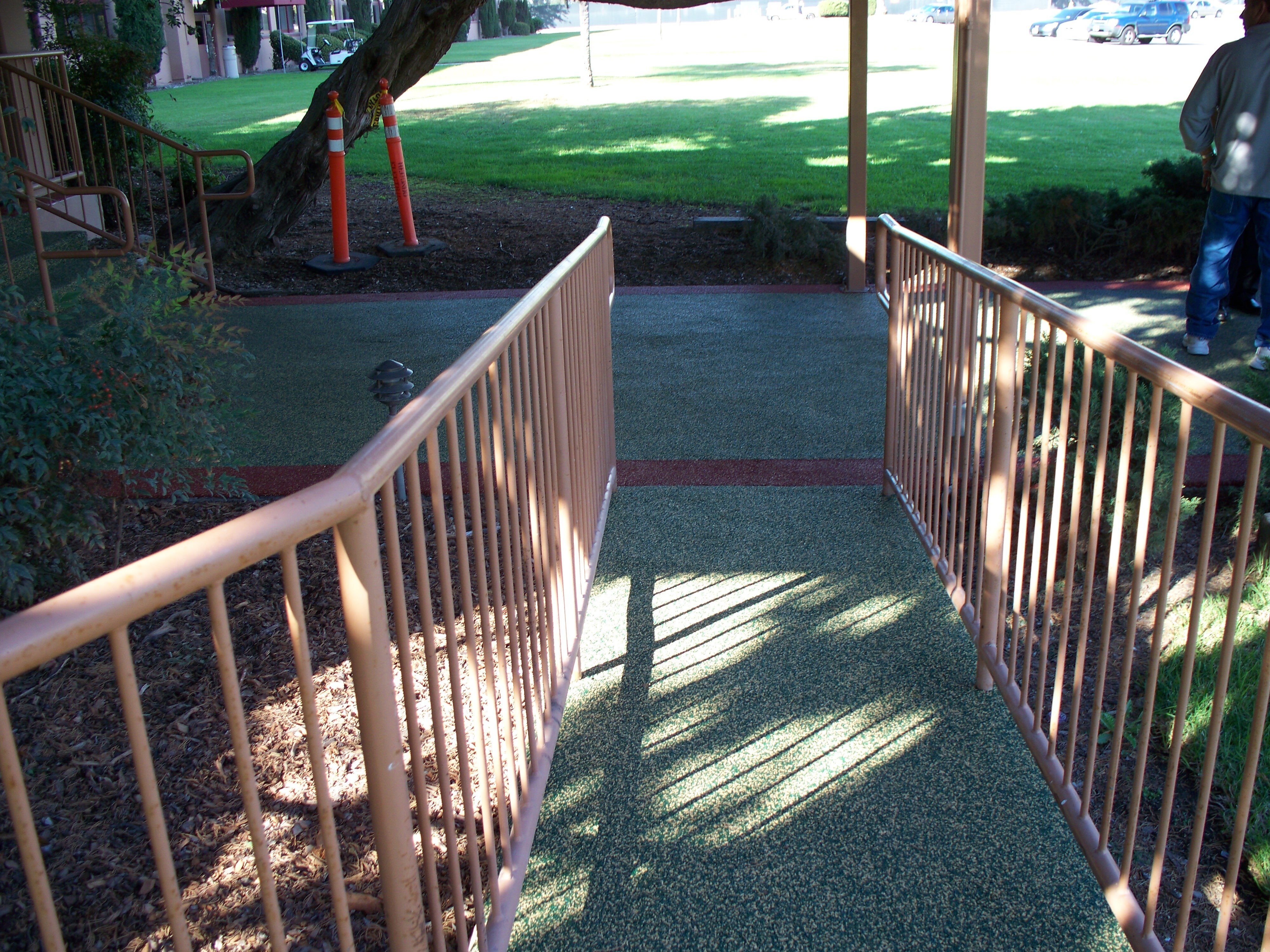
Applying a pour-in-place rubber surface to a handicap-accessible ramp is often viewed as a premium or “elevated” solution, and for good reason. It goes beyond basic compliance to deliver a safer, more durable, and more visually appealing access point for users of all abilities.
A handicap-accessible ramp is more than just a functional requirement; it’s a critical pathway that must perform reliably in all conditions. Traditional materials like concrete or asphalt can meet minimum standards, but they often fall short in terms of long-term comfort and traction. That’s where pour-in-place rubber surfacing stands out.
Pour-in-place rubber provides a seamless surface that may significantly reduce the risk of falls, especially in wet or icy conditions. Its textured finish enhances traction for wheelchairs, walkers, and foot traffic alike, helping ensure confidence and stability for every user. Additionally, the cushioned nature of the material may offer impact attenuation, which can help reduce injury severity if a fall does occur.
Accessibility is also improved in a more subtle but meaningful way. Because the surface is continuous and free of joints, cracks, or shifting materials, mobility devices can move smoothly without interruption. This eliminates the bumps and inconsistencies often found with modular systems or aging concrete ramps. The result is a more comfortable and dignified experience for users who rely on the ramp every day.
Durability is another key factor that makes this an elevated option. Pour-in-place rubber systems are designed to withstand heavy use and changing weather conditions without breaking down. Unlike traditional surfaces that may crack, chip, or require frequent patching, rubber surfacing maintains its integrity over time with minimal maintenance. This makes it a smart long-term investment for schools, parks, municipalities, and commercial properties.
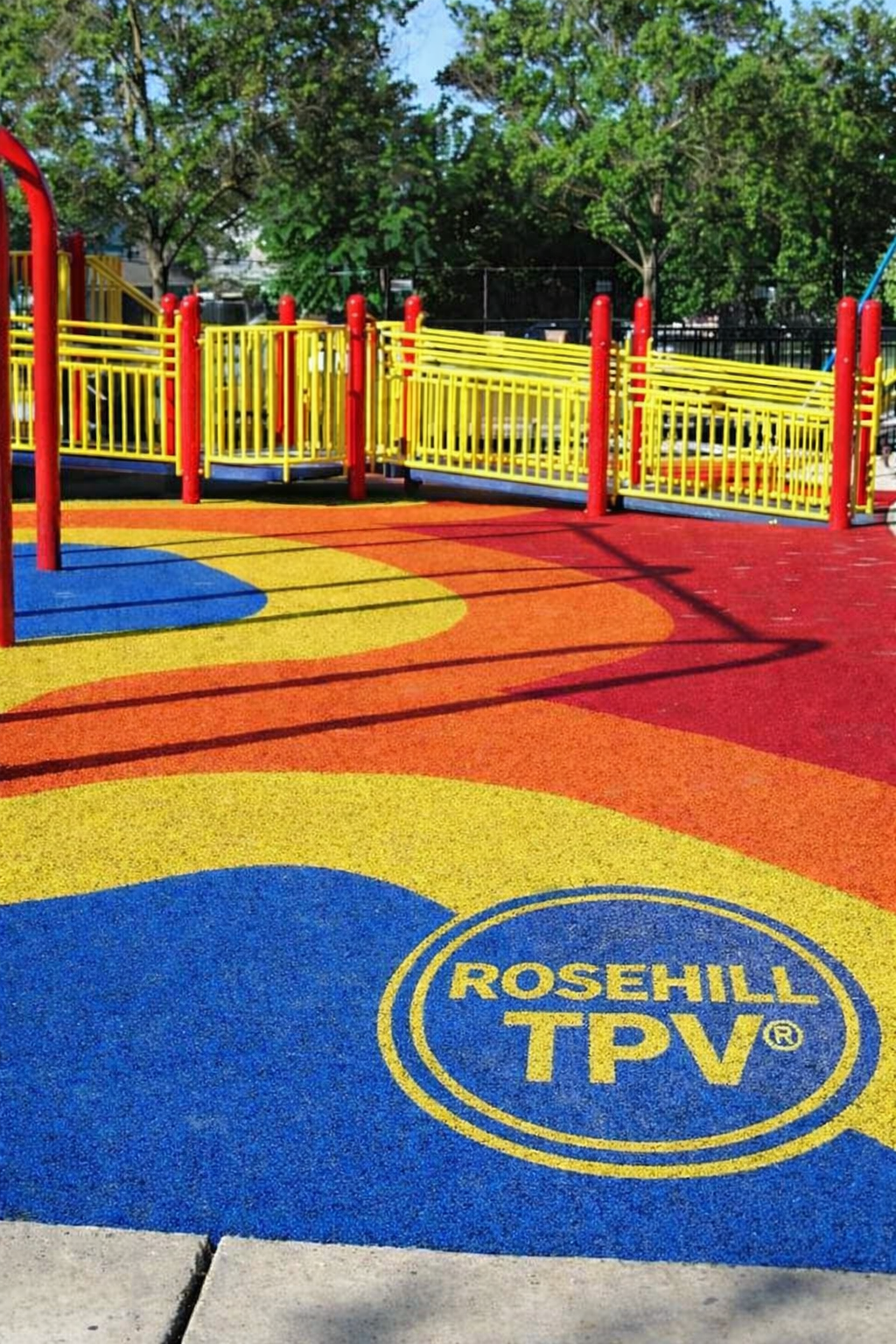
From an aesthetic standpoint, pour-in-place rubber also offers design flexibility that other materials simply can’t match. It can be customized in a wide range of colors and patterns to complement surrounding architecture or branding. For organizations focused on creating inclusive, welcoming environments, this added visual appeal helps reinforce a commitment to quality and accessibility.
Finally, choosing an elevated surface like pour-in-place rubber demonstrates a proactive approach. Rather than doing the bare minimum to meet ADA requirements, it shows a dedication to exceeding expectations, prioritizing safety, comfort, and longevity.
In today’s environment, where accessibility and user experience matter more than ever, upgrading a handicap-accessible ramp with pour-in-place rubber surfacing is not just an upgrade…..It’s a statement!